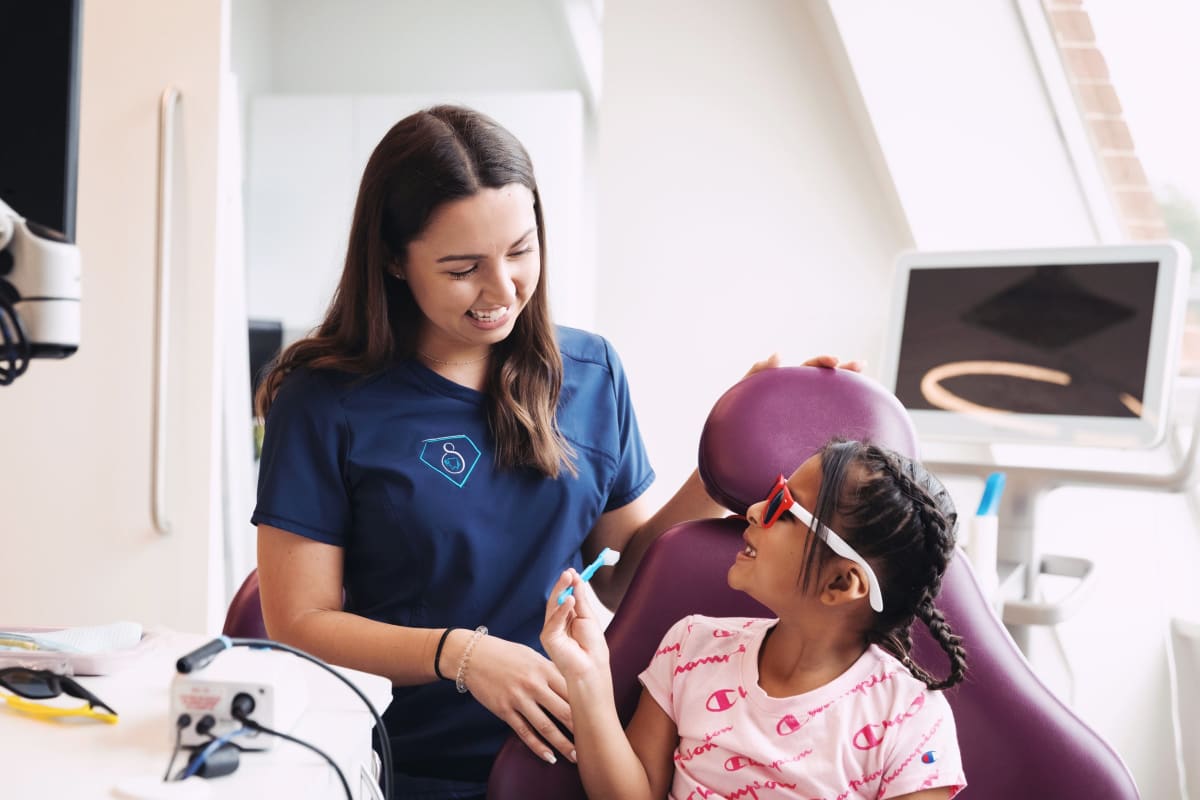
At some point, this question comes up for parents: can kids get Invisalign, and how old do they actually have to be? Maybe your child came home talking about a friend's clear aligners, or a hygienist mentioned some crowding worth keeping an eye on. Either way, you want a straight answer before you start making appointments.
For most children, clear aligners become an option once their permanent teeth have largely come in, which typically happens somewhere between ages 11 and 13. Invisalign Teen is designed specifically for that stage of development, built to work with a mouth that is still growing and changing. If your child is still losing baby teeth, it is likely a little too early.
That said, the window tends to open sooner than most parents expect, so it is worth asking the question now rather than waiting and missing the right moment. To see how aligners fit into everything we offer, you can explore our full range of pediatric dental and orthodontic services.
Dr. Liu and the team at SuperKids Pediatric Dentistry hear this question all the time from families in Sterling, Alexandria, Potomac, Rockville, and Mt. Vernon. If you would like a professional opinion on where your child stands, we would love to help. Reach out to us here and we will be glad to keep an eye on your child's progress at their regular checkups.
The most important thing to understand is that readiness has nothing to do with age on a calendar. It depends on where your child's teeth actually are right now. Two kids who share the same birthday can be years apart developmentally, which is why we never use age alone as the deciding factor. What we look at instead is whether the permanent teeth have come in enough to give us a stable foundation to work with.
Invisalign Teen is built specifically for growing mouths, and it works differently than the version designed for adults. That distinction matters, and we'll walk you through exactly what sets it apart a little further down. Beyond the anatomy, though, there's another piece of the puzzle worth knowing about early: wear time. Aligners only move teeth when they're actually being worn, so your child's daily habits and follow-through are just as important as the clinical picture.
A first visit often ends with something like "let's check back in six to twelve months," and that's genuinely a good result. It means growth is on track and we now have a baseline to compare against as things develop. Our pediatric dentists and orthodontists walk every family through the full picture, so you leave knowing exactly where your child stands and what comes next.
When parents ask what age a child can start aligners, the honest answer is that age alone doesn't tell the whole story. What actually matters is the stage your child's mouth is in right now. Two kids who share the same birthday can be in very different places developmentally, and that difference is what shapes the timing more than anything else.
Aligners work by applying gentle, steady pressure to teeth that are already fully in position. If your child still has a mix of baby teeth and permanent teeth coming in, there isn't a stable enough foundation to move teeth predictably. Think of it this way: a treatment plan needs something solid to work with, and teeth that are still making their way in simply aren't ready to be guided yet.
Dentists use the term mixed dentition to describe the phase when baby teeth and permanent teeth are sharing the same mouth at the same time. It's completely normal, and for most elementary-aged children it plays out over several years. During that stretch, teeth are loosening, falling out, and pushing through, sometimes all in the same month. Because the shape of the arch keeps shifting during this time, clear aligner treatment isn't a practical fit for most kids until that process has settled down.
At every routine visit, we keep a running record of how your child's teeth are coming in and how their bite is developing. That record is what tells us when aligners become a realistic option, and it's one of the reasons that consistent preventive and orthodontic care matters so much during these years.
Rather than waiting for a certain birthday to pass, the signal we're looking for is the point where the adult teeth have mostly arrived and settled into place. When that happens, the conversation naturally shifts from "someday" to "let's take a look," and our pediatric dentists and orthodontists will walk you through every option from there.

A lot of families come in assuming Invisalign is just one product, but Invisalign Teen is actually its own version, designed specifically for adolescent patients with a growing mouth and a full schedule. Three features in particular set it apart from the standard adult version.
Eruption tabs are small built-in spaces within the tray that reserve room for teeth that haven't fully come in yet. Instead of the aligner working against a tooth that's still emerging, it simply leaves space for that tooth to arrive on its own schedule. That's what makes treatment possible for a mouth that isn't quite finished growing.
Each aligner comes with tiny blue dots that gradually fade with wear, giving you and your child's provider a simple, low-stress way to confirm the trays are going in for the hours they should. There's no need for interrogation or arguments about who remembered what. The dots tell the story on their own.
Teenagers are busy, and things get lost along the way, whether it's a water bottle, a jacket, or an aligner. Invisalign Teen accounts for that reality by including replacement trays for lost or damaged aligners, something the standard adult version doesn't offer. It's a small detail that makes a real difference when life gets hectic.

By the time aligners come up as a possibility, Dr. Liu and our orthodontic team have usually already been tracking how your child's teeth are coming in, visit by visit, since the first permanent molars arrived around age six. That ongoing record is the strongest predictor of a good outcome, and it builds up long before anyone is ready to fit a tray.
One of the first things we look at is whether the six-year molars and twelve-year molars have fully come in. These molars act as anchors for the bite and give us reliable reference points when we start planning how to move teeth. Digital scanning and digital X-rays let us see what's still developing beneath the gumline, which is just as important as what's visible when your child smiles. Sometimes the teeth that haven't arrived yet tell us more than the ones that have.
A jaw that's still growing can actually change how and when we approach bite correction. Sometimes we want to take advantage of that growth, and sometimes it makes more sense to wait until things settle. Knowing your child's growth history over several years is what helps us make that call confidently, and it's one of the real benefits of having a dental team that has followed your child over time rather than meeting them for the first time at an orthodontic consult.
Not every alignment issue is the same, and the type of correction needed shapes our recommendation just as much as your child's age does. Mild crowding, small gaps, and certain bite patterns tend to respond really well to aligners. More involved movements, like significant rotations or cases where several teeth need to travel in very specific directions, may call for a different approach or a different sequence of treatment.
The clinical picture is only part of the story. Aligners need to be worn for around 20 to 22 hours a day, which means they come out for meals and go right back in afterward, every single time, without a parent reminding them at the lunch table.
That's a real daily responsibility, and it requires genuine follow-through. Plenty of capable, wonderful kids simply aren't ready for that yet, and that's completely okay. If your child tends to need reminders to stay on top of routines, it's worth mentioning during the evaluation. It's not a judgment at all; it's just useful information that helps us recommend the approach most likely to actually work for your family.
For some kids, traditional braces are simply the right tool, and that is not a downgrade. Braces give your child's orthodontist more precise control over how teeth move than a removable tray can offer, which makes them the stronger choice in situations like these:
That last point matters more than most parents expect. Traditional braces do not depend on your child remembering to put anything back in. They keep working around the clock, through busy school days and distracted evenings alike, which means that for a kid who struggles with routines, braces can actually lead to a shorter and smoother treatment overall.
It is also worth knowing that clear ceramic brackets are an option for families who are drawn to Invisalign mainly because of how discreet it looks. Ceramic braces give you the precise control of traditional braces with hardware that blends in much more naturally, so in some cases you really do get the best of both worlds.
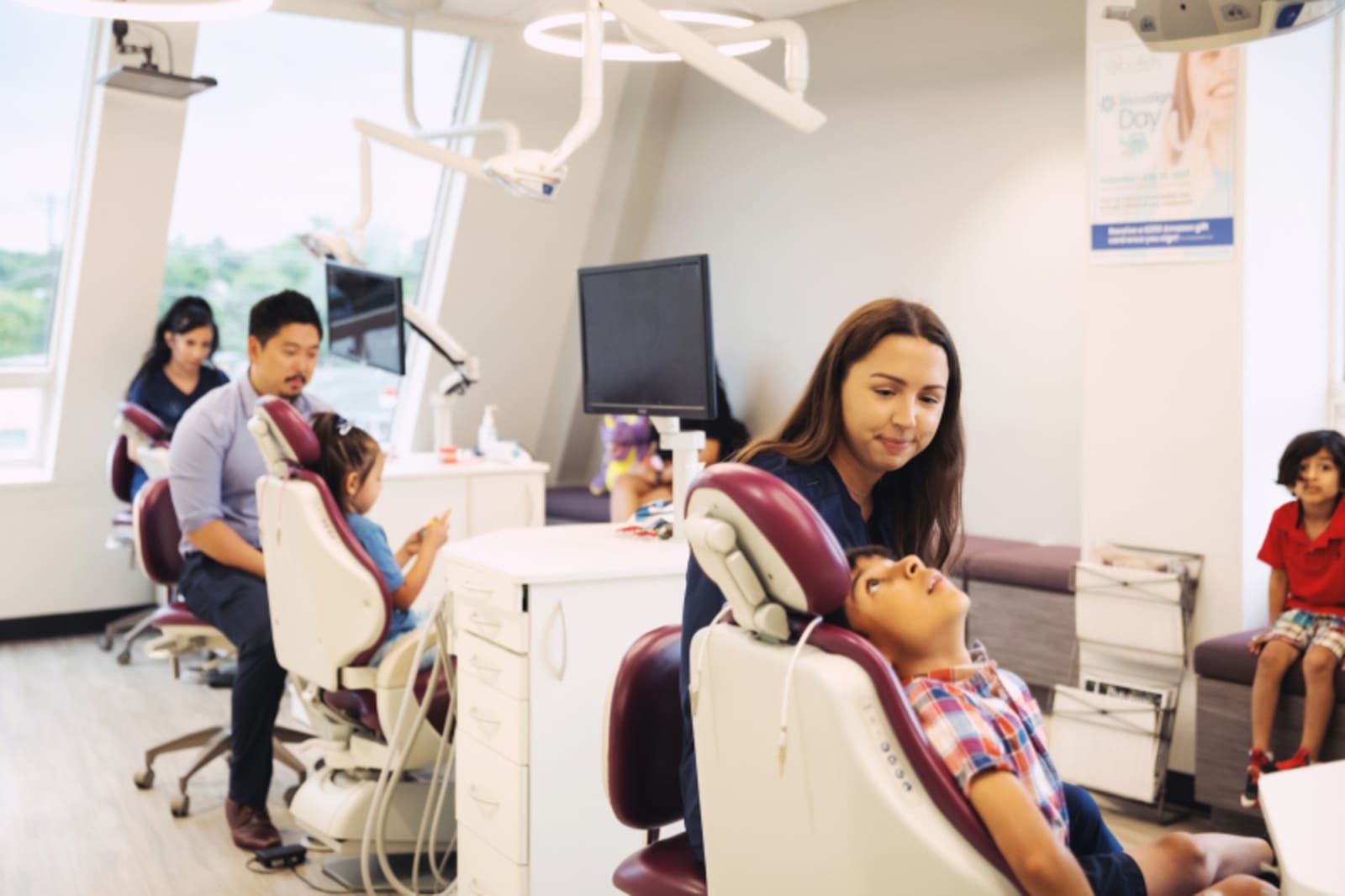
A lot of families put this visit off because they think they're going to be pressured into starting treatment right away, but that's really not what it is. Think of it as a look and a conversation.
You'll leave with a clear picture of where your child's teeth and jaw are right now, and what, if anything, needs attention. If your child hasn't visited us before, you can take a look at what a first visit with us looks like so you know what to expect.
During the evaluation, our team will take a close look at a few key things:
One of the most common things parents hear at this visit is something along the lines of: things look good, let's check back in six to twelve months once more teeth have come in. That's actually a great outcome. It means your child's development is on track, and now we have a solid starting point to compare against as things continue to change. When the right window for treatment opens, we'll be ready to move forward without missing a beat.
We also set aside time for the questions parents really want to ask, like how treatment would fit into your family's schedule and what to expect on the financial side. Insurance coverage and costs vary from plan to plan and case to case, so we go through all of that with you directly rather than leaving you to figure it out on your own.
Nine is actually a great age to come in for an evaluation, even if treatment itself isn't quite on the table yet. Seeing your child at this stage lets us spot any crowding or bite concerns while their jaw is still growing and easier to guide. It also gives us a starting point to compare against as more adult teeth come in, so when the timing is right, we're not starting from scratch.
For the right case, absolutely. When the correction needed is a good fit for aligners and your child wears them consistently, the results can be excellent. The two things that matter most are how involved the correction is and how reliably your child keeps the trays in throughout the day. If either of those feels uncertain, braces are often the more dependable choice, and our team will always be honest with you about which option makes the most sense for your child's specific situation.
When trays aren't worn consistently, tooth movement slows down and the current aligner can stop fitting the way it should, which often means extra appointments and a longer overall treatment. That's why we have an open conversation with both you and your child before anything starts, so everyone understands what the daily commitment looks like.
Not every single one, but most of the permanent teeth do need to be in and settled before we can begin. Invisalign Teen is actually designed with small built-in spaces called eruption tabs that leave room for any teeth still finishing their arrival, so a few stragglers won't necessarily hold things up, as long as the overall picture is ready to move forward.

There isn't a single age that answers "is my kid ready?" Every child grows differently, so the answer really comes down to their growth pattern, how their bite is developing, and what's actually happening in their mouth right now. That's exactly why an in-person evaluation is so helpful. Most families leave that first visit feeling relieved, because instead of guessing, they finally have a clear, honest picture of where their child stands and what comes next.
If you'd like that kind of clarity for your child, we'd love to help. We have several locations across the DC metro area to make it easy for your family to get started:
We'll walk you through the timing, answer your questions, and make sure your child's smile is moving in the right direction.

We can’t wait to meet you! Contact one of our five convenient locations around the DC area.
We are excited to announce the GRAND OPENING of our fifth Superkids office in Mt Vernon, VA. Accepting new patients starting January 16th, 2023!

